
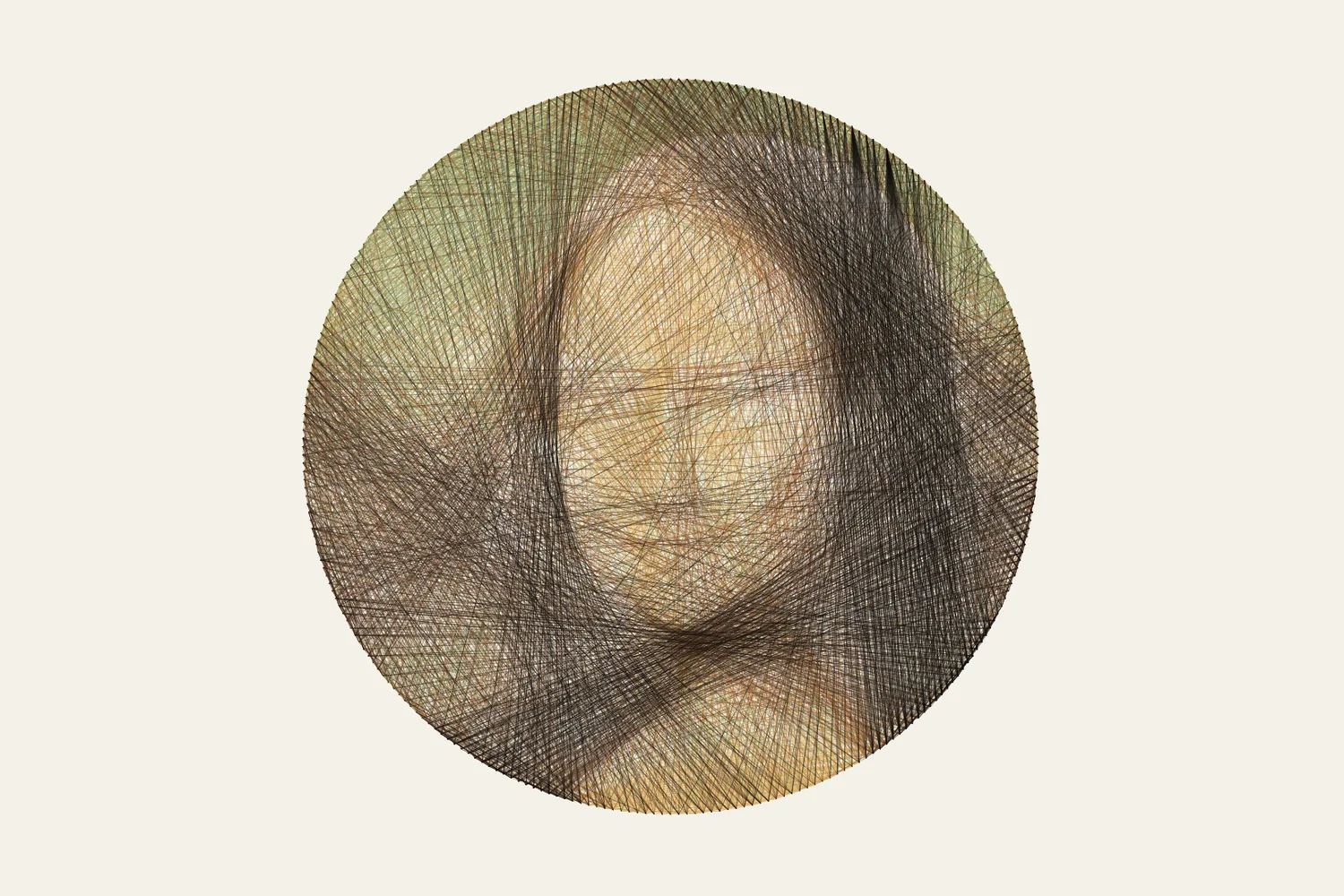
Do a final check
Before the piece goes on the wall, look over it in good light from several angles. Check for strands that have ridden up over a nail head, loose wraps, and nails that lean under the load. A strand that has slipped can usually be eased back under the head with a blunt tool. Trim any loose tails close to their knots.
Then step back to viewing distance. String art is made to be seen from a few metres away, and small irregularities that bother you up close usually disappear. Photograph the finished piece in even light for your project record.
Hang it securely
A board with hundreds of nails and close to a kilometre of thread is heavier than it looks. Fix hanging hardware to the back with screws shorter than the board is thick, so nothing can break through to the front. Two fixing points, such as a pair of D-rings with a wire or two hooks on the wall, stop a round board from rotating, so nail 1 stays at the top.
Never hang the board by its nails or thread. Choose wall fixings rated for the weight and the wall type, and check that the board hangs flat: a board leaning forward collects dust on the upper strands.
Choose a frame, or not
An open board shows the texture of the thread and the shadows of the nails, and many makers prefer it. A deep box frame protects the piece from dust and knocks. Measure the height of the nails plus the thread stacked on them, and choose a frame whose inner depth leaves a clear gap above that. Glazing must never press on the thread.
Glass and acrylic both add reflections that hide fine lines. If you frame the piece, hang it where windows and lamps do not reflect straight into the viewer’s eyes.
Light it well
Light from one side catches the nail heads and the edges of the strands and makes the surface look three-dimensional. Even, frontal light makes the image itself easier to read. Try both before deciding where the piece will hang.
Keep it out of direct sunlight. Over time, light can fade dyed thread and change the colour of bare wood, and the change is not even across the piece. Avoid walls above radiators or in damp rooms as well: heat and humidity make boards move, and a board that moves loosens its nails.
Keep it clean
Dust is the main enemy of an open piece. Brush it lightly with a soft, dry brush, working along the strands, or blow it away with a hand bulb blower. Do not use water, sprays or cleaning products, and do not put a vacuum nozzle against the thread.
When you move or store the piece, wrap it face up in clean paper, keep it flat, and never stack anything on top of it. Protect the edges, and the hands of whoever carries it, from the nail tips.
Put it into practice
Try your image, inspect the preview, and save the pattern that works for your project.
Open the generator